Disaster Island Survival How to Survive Tsunamis
Beat the waterline with scouting, elevation, and smart Shop tools.
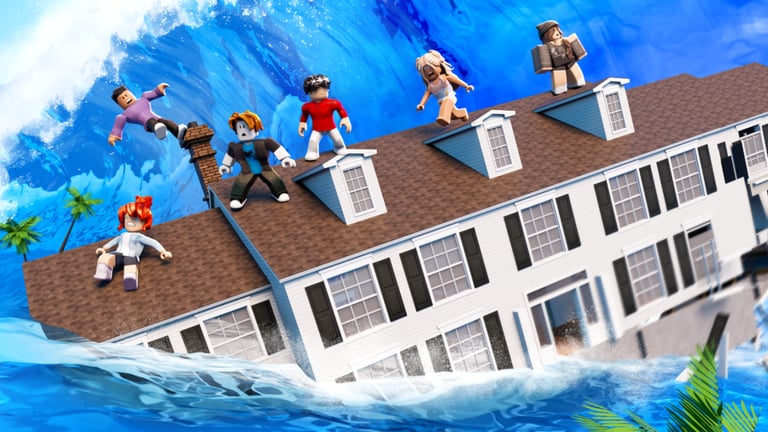
Tsunami rounds punish anyone still admiring street-level scenery. In Disaster Island Survival by Limitless Games, the waterline does not negotiate with “almost high enough” roofs. This guide teaches a repeatable elevation plan, how to read maps during the scout phase, when balloons and grapples matter, and how tsunami habits transfer to flash floods.
If you are still learning the HUD and Shop, skim Getting Started first. If you need Credits for movement gear, redeem active codes and follow How to Grind Credits.
The only tsunami rule that matters
Be above the final waterline before the wave finishes rising. Everything else—cosmetics, sightseeing, arguing in chat—is optional. Your first instinct when a tsunami (or heavy flood) is announced should be a committed sprint toward the tallest stable structure you already marked.
Stable means: multi-story buildings, towers, cliff heads, and large terrain peaks that are part of the map shell. Unstable means: thin piers, loose props, low sheds, and decorative stacks that look clever until they submerge or break.
Scout phase: build a height map in thirty seconds
As soon as you spawn:
- Spin the camera and note the skyline.
- Pick a primary high point and a backup if the primary is overcrowded or collapsing.
- Trace a path that avoids long beach runs. Beaches are beautiful and deadly.
- Remember vertical shortcuts: scaffolding, stairwells, hillside switchbacks, crane arms you can grapple.
Community maps vary, so height literacy beats memorizing one famous tower from a YouTube thumbnail. Ask the same questions every round.
Warning phase: commit early
When the tsunami warning hits, hesitate only long enough to confirm you are not already on a doomed pier. Then move. Players who “wait to see how high it gets” usually learn the answer underwater.
If you are mid-loot or mid-emote, cancel. Credits from a survived round beat whatever you were about to click in a low shop stall.
Survival phase: elevation discipline
- Do not bounce between two medium roofs. Climb to the highest safe deck and stay unless that deck is breaking.
- Watch for rising water cutting stairs behind you. Leave ground floors early so you are not trapped in a stairwell race.
- Respect crowd weight on tiny perches. If twenty players stack on a thin spire, have an adjacent ledge ready.
- Keep camera slightly down-slope so you see water progress and decide whether your ledge is truly enough.
Interior rooms at ground level are psychological comfort, not safety. Walls do not grant elevation.
Tools that change tsunami math
Balloon
A balloon-style tool lets you float above flooded ground when height routes fail. Activate with intent: too early and you drift into bad airspace; too late and you dunk. Practice timing in calmer rounds. Deep tips: Grapple and Balloon Tips.
Grapple
Grapples skip broken stair chains and yank you onto crane arms or roof lips. Aim for solid anchors above the projected waterline, not pretty billboards that might not hold your hopes.
Potions
Mini and Giant potions from codes like 75KLIKES and 35KLIKES change your body scale. Experiment offline of panic—giant hitboxes can snag geometry; mini profiles can fit odd ledges. Neither replaces height, but both can smooth a last-second mantle.
Flash flood overlap
Flash floods share the water thesis with less cinematic warning. If the ground becomes a moving river, treat it like a fast tsunami: abandon streets, claim elevation, use balloon if you own it. Skills from this page transfer directly.
When water stacks with another disaster, open Multi-Disaster Survival. Water usually forces an immediate reposition; fire or wind becomes the second priority once you are no longer drowning.
Map archetypes and how to read them
- Coastal towns. Pretty docks are traps. Head inland to the tallest hotel or cliff.
- Theme parks. Ride structures vary—favor maintenance towers over open track pieces.
- Mountain outposts. Natural elevation is your friend; just avoid gullies that channel water.
- Dense cities. Fire escapes and scaffolding beat street plazas. Keep a grapple for billboard-to-roof skips.
If a map feels hopelessly flat, your Shop investment in balloon tech pays for itself in one round.
Team tactics
Call the primary roof early. If a teammate is stuck, a verbal “north crane” helps more than emoting on the peak. Do not grief by blocking doors—tsunami rounds already supply enough chaos. Shared survival means more people learning routes, which makes future lobbies smarter.
Mistakes that cause repeat drownings
- Trusting single-story houses.
- AFK on the beach during scout phase.
- Spending all Credits on cosmetics before a balloon or grapple.
- Climbing glass decor that is not a real floor.
- Ignoring the Guides Hub after the same death three times.
Practice drills
- Drill A: On a non-water round, still race to the highest point in under twenty seconds. Build muscle memory.
- Drill B: Name your backup roof out loud every scout phase.
- Drill C: After redeeming codes via How to Redeem Codes, buy one traversal tool and use it deliberately on the next flood-like round.
After you stabilize tsunami rounds
Graduate to Survive Tornado for lateral threat reading, then Multi-Disaster Survival for stacked chaos. Tsunami mastery is elevation mastery—once that clicks, half the island’s panic disappears.
Watch the mid-article video for real movement pacing, then queue another round with a pre-picked primary and backup. The wave will still look huge. Your route should look boring—and boring routes keep you alive.
Frequently Asked Questions
Quick answers for Disaster Island Survival players.
What is the fastest way to survive a tsunami?
Scout the tallest stable structure at spawn, sprint there when the warning appears, and stay above the final waterline. Use a balloon or grapple if stairs fail.
Do houses keep me safe from tsunamis?
Only if they give real elevation. Ground-floor interiors are not safe. Prioritize multi-story roofs and terrain peaks.
Should I buy a balloon or grapple first for water rounds?
Either helps. Balloons forgive flat maps; grapples speed roof access. Read Grapple and Balloon Tips, then buy what your Credits allow after redeeming codes.
How do tsunamis differ from flash floods?
Both punish low ground. Tsunamis often feel like a rising waterline event; flash floods can rush earlier. Use the same elevation habits for both.
What if the whole server crowds one spire?
Keep a backup ledge. Overcrowded thin perches can fail socially even if the height is correct.
Where do I get Credits for tsunami gear?
Redeem active codes on the Codes Hub and survive rounds. The grind Credits guide covers longer-term Shop planning.